The global economic recession has translated into a development crisis for Africa, which is revealing the continent’s vulnerability not only to economic contraction but also to climate change. Paradoxically, this crisis also presents a unique opportunity: there is a real possibility to steer countries toward a new development model that will benefit not only Africa, but also the world.
NEW YORK – The global economic recession has translated into a development crisis for Africa, which is revealing the continent’s vulnerability not only to economic contraction but also to climate change. Changing weather patterns are already affecting the lives of millions of Africans by reducing food security, facilitating the spread of diseases like malaria, and prompting mass migration. The livelihoods and lives of millions of people are at risk.
Paradoxically, this crisis also presents a unique opportunity for Africa. The urgency of efforts to address climate change is revealing interesting prospects on the mitigation side, particularly in the areas of renewable energy and low-carbon growth. There is a real possibility to steer countries toward a new development model that will benefit not only Africa, but also the world.
In the meantime, adaptation to climate change is critical. For Africa this means “weather proofing” development by increasing food yields, investing in climate-resilient crops and infrastructure, promoting rainwater harvesting, and expanding medical control measures in anticipation of an increase in vector-borne diseases. Africa needs additional resources, over and above existing aid commitments, to adapt to climate change.
Financing adaptation to climate will be a formidable challenge, particularly as it involves additional costs above traditional development assistance – at a time when foreign-aid budgets are under pressure. Estimates of the amounts needed by developing countries to help them adapt to these challenges vary between $50 and $100 billion per year. This is why British Prime Minister Gordon Brown’s proposal to create a fund for climate change is so welcome.
Failing to act now will increase costs in the future – both financial and humanitarian. We all stand to lose from a reversal of the economic and social progress made across Africa in the past decade. Burgeoning markets might disappear and investment opportunities evaporate, while the risk of political instability will increase.
Every percentage-point fall in growth has direct social consequences, whether on nutrition levels, infant mortality, or school attendance. Every person pushed back into poverty is another step away from achieving the Millennium Development Goals.
Access every new PS commentary, our entire On Point suite of subscriber-exclusive content – including Longer Reads, Insider Interviews, Big Picture/Big Question, and Say More – and the full PS archive.
Subscribe Now
For all of these reasons, the continued engagement and support of all of Africa’s partners, including the G-8 countries, is vital. As this year’s DATA Report from the Africa advocacy group ONE underscores, many donors are honoring their aid commitments, despite the economic downturn.
These countries recognize the practical value of investing in Africa’s development, as well as the moral and political imperative of keeping their promises. They acknowledge that Africa is bearing the brunt of the economic and climate crises, even though it was least responsible for creating them. Regrettably, this is not the case for all G-8 countries. Italy, this year’s G-8 host, has fallen behind its peers at a time when it is supposed to lead by example.
We need solutions that will prevent environmental catastrophe and that are equitable for every human being. This will require bold political leadership and unprecedented solidarity between rich and poor countries. At this year’s G-8 summit, a breakthrough on supporting agriculture, investing in green technology, and strengthening health systems is possible. We hope that the G-8 leaders demonstrate foresight and include Africa in their deliberations. Africa’s international partners must not look the other way at this crucial moment.
To have unlimited access to our content including in-depth commentaries, book reviews, exclusive interviews, PS OnPoint and PS The Big Picture, please subscribe
The US retirement system is failing American workers. But after decades of pushing fake fixes – especially forcing people to work longer – US policymakers have an opportunity to make real progress in bolstering Americans' economic security in old age.
proposes a Grey New Deal that would boost economic security for all US workers in old age.
From a long list of criminal indictments to unfavorable voter demographics, there is plenty standing between presumptive GOP nominee Donald Trump and a second term in the White House. But a Trump victory in the November election remains a distinct possibility – and a cause for serious economic concern.




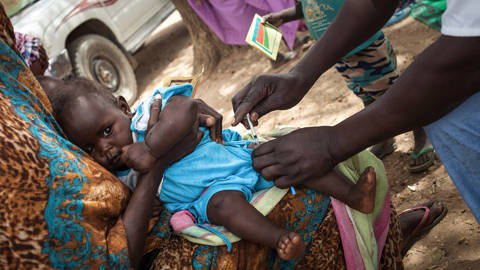

NEW YORK – The global economic recession has translated into a development crisis for Africa, which is revealing the continent’s vulnerability not only to economic contraction but also to climate change. Changing weather patterns are already affecting the lives of millions of Africans by reducing food security, facilitating the spread of diseases like malaria, and prompting mass migration. The livelihoods and lives of millions of people are at risk.
Paradoxically, this crisis also presents a unique opportunity for Africa. The urgency of efforts to address climate change is revealing interesting prospects on the mitigation side, particularly in the areas of renewable energy and low-carbon growth. There is a real possibility to steer countries toward a new development model that will benefit not only Africa, but also the world.
In the meantime, adaptation to climate change is critical. For Africa this means “weather proofing” development by increasing food yields, investing in climate-resilient crops and infrastructure, promoting rainwater harvesting, and expanding medical control measures in anticipation of an increase in vector-borne diseases. Africa needs additional resources, over and above existing aid commitments, to adapt to climate change.
Financing adaptation to climate will be a formidable challenge, particularly as it involves additional costs above traditional development assistance – at a time when foreign-aid budgets are under pressure. Estimates of the amounts needed by developing countries to help them adapt to these challenges vary between $50 and $100 billion per year. This is why British Prime Minister Gordon Brown’s proposal to create a fund for climate change is so welcome.
Failing to act now will increase costs in the future – both financial and humanitarian. We all stand to lose from a reversal of the economic and social progress made across Africa in the past decade. Burgeoning markets might disappear and investment opportunities evaporate, while the risk of political instability will increase.
Every percentage-point fall in growth has direct social consequences, whether on nutrition levels, infant mortality, or school attendance. Every person pushed back into poverty is another step away from achieving the Millennium Development Goals.
Subscribe to PS Digital
Access every new PS commentary, our entire On Point suite of subscriber-exclusive content – including Longer Reads, Insider Interviews, Big Picture/Big Question, and Say More – and the full PS archive.
Subscribe Now
For all of these reasons, the continued engagement and support of all of Africa’s partners, including the G-8 countries, is vital. As this year’s DATA Report from the Africa advocacy group ONE underscores, many donors are honoring their aid commitments, despite the economic downturn.
These countries recognize the practical value of investing in Africa’s development, as well as the moral and political imperative of keeping their promises. They acknowledge that Africa is bearing the brunt of the economic and climate crises, even though it was least responsible for creating them. Regrettably, this is not the case for all G-8 countries. Italy, this year’s G-8 host, has fallen behind its peers at a time when it is supposed to lead by example.
We need solutions that will prevent environmental catastrophe and that are equitable for every human being. This will require bold political leadership and unprecedented solidarity between rich and poor countries. At this year’s G-8 summit, a breakthrough on supporting agriculture, investing in green technology, and strengthening health systems is possible. We hope that the G-8 leaders demonstrate foresight and include Africa in their deliberations. Africa’s international partners must not look the other way at this crucial moment.