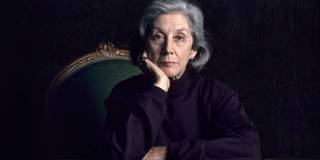
Opposition to dictatorship can be a mighty catalyst in art and literature. Vaclav Havel rose to the presidency of the Czech Republic through the power of his essays. No matter how wayward his pronouncements may be today, Aleksander Solzhenitsyn carries still the halo of his damnations of, and revelations about, the gulag. But what becomes of an artist who drew inspiration from ideological opposition when the artist’s opponent is defeated or disappears? What role must he or she play after liberation comes? Nadine Gordimer, the South African Nobel laureate in literature, asks and attempts to answer these questions.
CAPETOWN: Since, as the eighteenth century theological philosopher Swedenborg reminds us, the written word is humankind’s exclusive property, there is a commonly accepted recognition that the responsibility that writers possess for this treasure is great. Yet, there are as many disagreements on, as there are definitions of, the role that literature is to play in society.
Some see writing as purely the aesthetic exploration of language, of the word. Some modern authors, indeed, as Susan Sontag once remarked, can be "recognized by their efforts to disestablish themselves" by their "will not to be morally useful to the community." Such writers seek not the role of the social critic, but envision themselves as acting as "seers, spiritual adventurers, and social pariahs."
No less a figure than the German novelist Thomas Mann measuredly opposed such deliberate isolation on the part of writers, posing instead the claims that society makes upon art: "the courage to recognize and express -- that is the quality that makes literature." And a similar cry can be heard from the Polish poet Czeslaw Milosz, who said: "What is poetry which does not save nations or peoples? A connivance with official lies."
In the recent history of our country, we South African writers have been faced directly in our poetry, our prose, and our plays with the daunting challenge of which Milosz spoke. Transformation of the world of apartheid by literary means and or style was simply not a possibility in a world of racial classification, mass relocation and removal of peoples, the silencing of our people by detention without trial, the banishment of our people to our own Devil’s Island, and the overwhelming -- and ever present -- racist rhetoric of Verwoerd, Botha, and Terreblanche. If literature was at all to meet the challenge posed by apartheid, it had to be through acting in light of what the critic Walter Benjamin defined as the guideposts that the playwright Bertolt Brecht had adopted: the aim, the responsibility of the writer, must be to cause his or her audience to be astonished at the circumstances under which he or she was functioning.
From that unambiguous premise came what is known as our protest literature. And if the aesthetic exploration of the word was taken out of its velvet casket, it could not be abandoned utterly and with disdain; whatever we wrote and now write, with whatever purpose, whether to express the struggle for freedom or the passion of a love affair, can only reach towards the power of the truth in the measure by which we are capable of exploring the splendour of language brought into its service.
In South Africa we had to clear our language of apartheid’s claptrap and the official euphemisms that sought to shroud the horrors of our daily lives -- euphemisms such as "resettlement"for "banishment", and "permanent removal" for "hit squad assassination." Yes, we had to clear our heads of the official language before we could sit down to write in a creative one; and some of us had to pay dearly for writings that asserted the truth against connivance with the official lies; seeing our books banned from publication and removed from circulation, experiencing, either formally or through pressure on our family, friends, and associates personal bans that kept us from the outside world (and the outside world from us). Worst of all, some of us were condemned to bans that silenced us, bans which prevented us from writing at all.
Today, we South African writers are hungry for an exchange of ideas with writers and artists from whom we were forcibly quarantined for so long. This creative isolation was something that we accepted as part of our contribution to the global political, economic, and cultural isolation of the apartheid regime, an essential strategy in the struggle for liberation. Now we are free to enjoy and profit from our growing contacts with our comrade writers (Please, do not be afraid of that word comrade; it may have poisonous associations in the former communist countries, but we used it, and continue to use it here, in its broadest human meaning) from our own continent and whoever will invite us to their countries or, even better, come to us on our home ground.
On our home ground, black and white South Africans are now legally brothers and sisters, united formally and politically in one country. But how can this formal status be made into a social and spiritual reality? Art and literature were at the heart of the revolution and so they must remain engaged today, for art and literature are at the heart of reconciliation and reconstruction.


Comments (0)
You need to login in order to leave a comment. If you do not yet have an account, please register.
The two commenting options explained
Watch a 1 minute video
to discover how you can comment on the entire article or a specific paragraph. The two images below also explain the two ways of commenting.
1) Entire article comment
Once logged in, simply click inside the comment box where it says "Enter text here." Enter and post your comment.
2) Paragraph comment
Please log in first. Then click to the left of the desired paragraph. Your cursor will automatically move to the comments box. Enter and post your comment.