Exit from comment view mode. Click to hide this space
Email | Print

The Moral Limits of Markets

TOKYO – Today, there are very few things that money can’t buy.

If you are sentenced to a jail term in Santa Barbara, California, and don’t like the standard accommodations, you can buy a prison-cell upgrade for about $90 per night.

If you want to help to prevent the tragic fact that, each year, thousands of babies are born to drug-addicted mothers, you can contribute to a charity that uses a market mechanism to ameliorate the problem: a $300 cash grant to any drug-addicted woman willing to be sterilized.

Or, if you want to attend a US Congressional hearing, but don’t want to wait for hours in line, you can enlist the services of a line-standing company. The company hires homeless people and others in need of work to wait in line – overnight if necessary. Just before the hearing begins, the paying customer can take his or her line-stander’s place in the queue, and claim a front-row seat in the hearing room.

Is there anything wrong with buying and selling these things? Some would say no; people should be free to spend their money to buy whatever someone else is willing to sell. Others believe that there are some things that money should not be able to buy. But why?  What exactly is wrong with selling prison-cell upgrades to those who can afford them, or offering cash for sterilization, or hiring line-standers?

To answer questions such as these, we need to pose a bigger question: What role should money and markets play in a good society?

Asking this question, and debating it politically, is more important than ever. The last three decades have witnessed a quiet revolution, as markets and market-oriented thinking have reached into spheres of life previously governed by non-market values: family life and personal relations; health and education; environmental protection and criminal justice; national security and civic life.

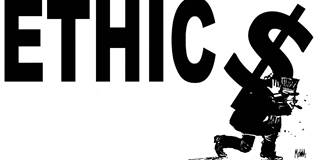
Almost without realizing it, we have drifted from having market economies to becoming market societies. The difference is this: A market economy is a tool – a valuable and effective tool – for organizing productive activity. A market society, by contrast, is a place where almost everything is up for sale. It is a way of life in which market values seep into social relations and govern every domain.

We should be worried about this trend for two reasons. First, as money looms larger in our societies, affluence – and its absence – matters more. If the main advantages of affluence were the ability to afford yachts and fancy vacations, inequality would matter less than it does today. But, as money comes to govern access to education, health care, political influence, and safe neighborhoods, life becomes harder for those of modest means. The marketization of everything sharpens the sting of inequality.

A second reason to resist putting a price tag on all human activities is that doing so can be corrupting. Prostitution is a classic example. Some object to it on the grounds that it typically exploits the poor, for whom the choice to sell their bodies may not be truly voluntary. But others object on the grounds that reducing sex to a commodity is inherently degrading and objectifying.

The idea that market relations can corrupt higher goods is not restricted to matters of sex and the body. It also applies to civic goods and practices. Consider voting. We don’t allow a free market in votes, even though such a market would arguably be “efficient,” in the economist’s sense of the term. Many people don’t use their votes, so why let them go to waste? Why not let those who don’t much care about an election’s outcome sell their vote to someone who does? Both parties to the transaction would be better off.

The best argument against a market in votes is that the vote is not a piece of private property; rather, it is a public responsibility. To treat a vote as an instrument of profit would be to degrade it, to corrupt its meaning as an expression of civic duty.

But, if a market in votes is objectionable because it corrupts democracy, what about systems of campaign finance (including the one currently in place in the United States) that give wealthy donors a disproportionate voice in elections? The reason to reject a market in votes – preserving the integrity of democracy – may be a reason to limit financial contributions to political candidates as well.

Of course, we often disagree about what counts as “corrupting” or “degrading.” To decide whether prostitution is degrading, we have to decide how human sexuality is properly valued. To decide whether selling prison-cell upgrades corrupts the meaning of criminal justice, we have to decide what purpose criminal punishment should serve. To decide whether we should allow the buying and selling of human organs for transplantation, or hire mercenaries to fight our wars, we have to think through hard questions about human dignity and civic responsibility.

These are controversial questions, and we often try to avoid addressing them in public discourse. But that is a mistake. Our reluctance to engage morally contested questions in politics has left us ill-equipped to deliberate about one of the most important issues of our time: Where do markets serve the public good, and where do they not belong?

Read more from our "The Clash of the Capitalisms" Focal Point.

Reprinting material from this Web site without written consent from Project Syndicate is a violation of international copyright law. To secure permission, please contact us.

VisitYear in Review 2012

  • Avatar for Joseph E. Stiglitz

    A Year on the Brink by Joseph E. Stiglitz

    The two main surprises in 2012 were the slowdown in emerging markets, which was slightly sharper and more widespread than anticipated, and Europe’s embrace of some truly remarkable reforms – though still far short of what is needed. Looking to 2013, the biggest global economic risks are there and in the US.

  • Avatar for Christine Lagarde

    The Future Global Economy by Christine Lagarde

    A world that is bound closely together must be a world that works closely together if it is to prosper together. We are multiple players, but we are engaged in a single game – a game that must be cooperative, not simply competitive.

  • Avatar for Kaushik Basu

    The Emerging Economies’ Eurozone Crisis by Kaushik Basu

    For emerging economies, medium- to long-term growth prospects are bright. Easing short-term jitters will require a clear and credible program for returning high-income economies, especially those in Europe, to a sustainable fiscal path.

  • Avatar for Guido Mantega

    Brazil’s Economic Revolution by Guido Mantega

    In 2012, Brazil, beset by fallout from the global economic crisis, undertook bold measures to reinvigorate growth, including interest-rate reductions, tax reform, and steps aimed at stimulating private investment. More important, the government’s policies will have a permanent – indeed, revolutionary – impact on Brazil’s economy.

  • Avatar for Bill Gates

    The Optimist’s Timeline by Bill Gates

    A decade ago, many people believed that the proliferation of mobile devices in Africa would mean a short leap to digital empowerment. But digital empowerment is a long and ongoing process, and the mere existence of cellular technology does not immediately change how poor people meet their basic needs.

  • Avatar for Jim O'Neill

    Emerging World Rising by Jim O'Neill

    The US will face recurring challenges with the “fiscal cliff” until financial markets pressure policymakers into more radical deficit reduction. But, despite this and associated growth disappointments, the global economy will perform better in 2013 than many people expect, owing to emerging countries' rising share of global output.

  • Avatar for Nassim Nicholas Taleb

    More Skin in the Game in 2013 by Nassim Nicholas Taleb

    In an opaque system, operators have an incentive to hide risk, taking upside without downside. And there is no possible risk management method that can replace having skin in the game – particularly when informational opacity is compounded by informational asymmetry.

  • Avatar for George Soros

    Europe’s Crisis of Values by George Soros

    Far from being a voluntary association of equals, the euro is now held together by hierarchy and harsh discipline. Instead of European fraternity and solidarity, hostile national stereotypes proliferate, giving rise to extremist forces that gained ground throughout the continent in 2012.

  • Avatar for Peter Sutherland

    The Bilateral Threat to Free Trade by Peter Sutherland

    The Doha Round of global trade talks appears to have died this year, almost without a whimper. While a small portion of the project may be saved, the essential reality is that this is a unique failure in the history of multilateral trade negotiations, which have transformed the global economy since World War II.

  • Avatar for John Vickers

    The Great Bank Debate by John Vickers

    Structural reform of banks does not solve all problems, but, at least for the UK and the rest of Europe, it is a key part of the overall reform package for the financial sector. Now, five years on from the start of the crisis, the debate about how to achieve a more stable, loss-absorbent banking system has finally begun.

  • Avatar for Anat Admati

    The Great Bank Escape by Anat Admati

    Corporate decisions taken in the name of shareholder value often benefit only those whose wealth is closely tied to the firm's profits, and may be harmful to many shareholders. If policymakers and regulators do not strengthen their reform efforts, taxpayers and shareholders – not bankers – will suffer the consequences of the next crisis.

  • Avatar for Haruhiko Kuroda

    Asia’s Hard Road by Haruhiko Kuroda, Changyong Rhee

    Next year will present significant challenges and new responsibilities – political, economic, and social – for developing Asia. The path to sustainable, inclusive economic growth will be difficult, but it will also entail exciting opportunities for Asia and for the rest of the world.

  • Avatar for Daron Acemoglu

    Is State Capitalism Winning? by Daron Acemoglu, James A. Robinson

    Avatars of liberal capitalism like the US and the UK continued to perform anemically in 2012, while many countries that rely on state capitalism have not only grown rapidly and steadily over the last several decades, but have also weathered recent economic storms with surprising ease. So, is it time to update the economics textbooks?

  • Avatar for Shinzo Abe

    Asia’s Democratic Security Diamond by Shinzo Abe

    Peace, stability, and freedom of navigation in the Pacific Ocean are inseparable from peace, stability, and freedom of navigation in the Indian Ocean. Japan, as one of the oldest sea-faring democracies in Asia, should play a greater role – alongside Australia, India, and the US – in preserving the common good in both regions.

  • Avatar for Abdullah Gul

    Crisis and Transformation by Abdullah Gul

    Turkey’s immediate neighborhood will continue to dominate the global policy agenda in 2013. To its north, Europe is at a crossroads, with ramifications that extend well beyond the confines of the EU, while an irreversible quest for dignity, freedom, democracy, and peace is altering the political landscape to its south.

  • Avatar for Leon E. Panetta

    America’s Pacific Rebalance by Leon E. Panetta

    The US military has entered a period of historic change after more than a decade of war following the terrorist attacks of September 11, 2001. The key change is a strategic "rebalance" toward the Asia-Pacific region, reflecting its countries' central role for global security and prosperity in the twenty-first century.

  • Avatar for Juan Manuel Santos

    The Last Guerrillas by Juan Manuel Santos

    The Colombian government is committed to ending five decades of internal armed conflict by any means possible. The talks currently underway between the government and the FARC have the potential to bring the violence to an end, bolstering Colombian development efforts and contributing to regional peace and stability.

  • Avatar for Pierre Moscovici

    A Year of Reckoning for France and Europe by Pierre Moscovici

    France’s economic performance has been lackluster during the past ten years, particularly with respect to competitiveness, debt sustainability, public spending, and the labor market. But the government has vowed to make significant progress in each of these areas over the next five years – beginning in 2013.

  • Avatar for Michael J. Sandel

    The Moral Limits of Markets by Michael J. Sandel

    Almost without realizing it, we have drifted from having market economies to becoming market societies. A market economy is a tool for organizing productive activity, while a market society is a place where almost everything – from our bodies to our politics – is up for sale.

  • Avatar for Turki bin Faisal al-Saud

    How to Win in the Middle East by Turki bin Faisal al-Saud

    Analysts the world over are assessing the situation in the Middle East in 2012 in terms of the region’s "winners" and "losers." But, in the bloody, hostile miasma of the Middle East, being a “winner” in any sense of the word is fallacious.

  • Avatar for Mark Mazower

    Weimar 2013? by Mark Mazower

    In Europe, where national economic failure once led to the collapse of democracy itself, people are now asking if it could happen again. Communism and fascism may have been discredited since then, but we should not be complacent merely because we cannot imagine the alternatives.

  • Avatar for Imran Khan

    Ground the Drones in 2013 by Imran Khan

    Although 2012 marked the beginning of the end of US and NATO forces’ presence in Afghanistan, reliance on air strikes by unmanned drones escalated. Now that Barack Obama no longer faces the pressure of campaigning, he would be wise to use the first year of his new term to end America's indiscriminate and barbaric attacks.

  • Avatar for Nina L. Khrushcheva

    The History of Russia’s Future by Nina L. Khrushcheva

    The harsh policies that have allowed Russian President Vladimir Putin to maintain a stranglehold on Russia have ensured the country’s decline. As 2013 begins, Russia is back on its treadmill of history, treating the past as prologue – and thus wasting its resources and blighting its people's lives.

  • Avatar for Mehdi Khalaji

    The Enduring Egypt-Iran Divide by Mehdi Khalaji

    The Muslim Brotherhood’s ascent to power in the aftermath of Egypt revolution in 2011 initially inspired hope of renewed diplomatic relations with Iran. But, despite shared ideological principles, significant political obstacles continue to inhibit bilateral cooperation.

  • In 2012: The Year of the Locusts, Project Syndicate’s special Year in Review, the world’s leading economists, policymakers, political leaders, strategic thinkers, and public intellectuals provide an exclusive, sharp-eyed look at the last 12 months – and compelling analyses of the trends that will shape events in 2013.

Exit from comment view mode. Click to hide this space

Comments (0)

You need to login in order to leave a comment. If you do not yet have an account, please register.

close

The two commenting options explained

Watch a 1 minute video
to discover how you can comment on the entire article or a specific paragraph. The two images below also explain the two ways of commenting.

1) Entire article comment
Once logged in, simply click inside the comment box where it says "Enter text here." Enter and post your comment.

2) Paragraph comment
Please log in first. Then click to the left of the desired paragraph. Your cursor will automatically move to the comments box. Enter and post your comment.

Show comments of
  1. Commented

    sande cohen

    As a recently retired college prof. (arts and humanities), the raising of tuition far above inflation and lowering of the quality of the faculty (a truth few wish to acknowledge) is the educational version/form of fraud and corruption--yet it is impossible to convince people of this. Why? Because we are dealing with fetish-items--the name of an institution grafted to the work-career of a student. The narrowing of life into a sub-set of career requires distance and withdrawal, but who can do this in a total business environment?

  2. Commented

    Paul Condon

    'The best argument against a market in votes is that the vote is ... "
    Not in my opinion. The best arguement depends on the attitudes and biases of the reader. The argument given is not even the best economic argument. For example, an economic argument that I prefer is that the buying and selling of votes has enormous negative externalities, in that it transforms society in a way that makes entirely other from what it was before a market in votes was allowed. Think for a moment about how it would be implement. How could the buyer be assured that the purchased was properly delivered, etc., etc.

  3. Commented

    Dallas Weaver, Ph.D.

    I fail to see the significance of having money be a factor at a time when political power is being concentrated at higher and higher levels. Real wealth is control over the disposition of assets and decision making, not who "owns" the asset (that only determines who pay the taxes).

    The rising inequality of power, especially power over other people, may be a larger problem than money that is all exchanged as a voluntary mutually beneficial relationship. It is in the interest of the power elite to divert attention towards someone else such as those who have made a lot of money.

  4. Commented

    David Crichton

    Interesting article on the challenges of having a market for all goods and complementary with the release of the movie Atlas Shrugged. Pricing generally breaks down for a public or higher good due to the inability to measure and capture hidden social costs. Your article takes it a step further with the question of whether higher goods should be marketed at all. I suppose Ms Rand would say yes. Some public goods, such as electricity and water, are provided only via regulated markets. Other public goods, such as universal mail service, military defense and fire protection, are provided by government and taxation. Finally, there are a category of “higher” goods or activities that personal in nature and yet have an impact on others in society (and yourself). An individual clearly should not be permitted to purchase from the government the right to break the law that harms another or similarly not have the right to purchase a verdict of “Not Guilty” from a jury/judge. I would argue that markets should not be available to enable the sale of higher goods, so that the debate becomes where the activity falls on the continuum of a market good, public good or higher good.

  5. Commented
    100%

    Vincent Thanarajah Chandran

    I am afraid that I beg to differ with the statement- that “Business environment should be foggy and deregulated for economy to prosper was considered”.
    The law must be certain and this is certainly not so in the USA:-
    • When you influence a politician to vote in a certain way it is called corruption making lobbyists criminals. This new business has no place in the institution of democracy-it takes away the one man one vote!
    o Bad enough the courts have resurrected a company to be a human being and can participate in elections!!!
    • When lawyers prepare documents which allow bankers to commit a fraud, both lawyer and bankers should be jailed for fraud or fraudulent negligence. The mortgage crisis is an example where no one went jail-in fact bankers who bet on both sides made more money. Banks should be closed down or at least the bankers arrested.
    • Pharmaceutical and big corporation who put out products that kill the man on the street pay fines and get away with it. One large company paid $1 billion in fines after making $8 billion in of profits after selling drugs that resulted in countless deaths of Americans. If you drove a car and killed someone you will go to jail for negligence. So you can pay to stay away from jail.
    These are only a few examples
    These are some of the examples where laws must be made to control businesses behavior-sadly, thieves are getting away with murder in the USA.


  6. Commented
    100%

    Joshua Ioji Konov

    The Rule of Law in Business

    From generations the rule of common law does not apply to business in its force and clarity because it is considered counterproductive in providing most adequate conditions for businesses to grow up. Business environment should be foggy and deregulated for economy to prosper was considered. Unless in the Common Law where clarity was main priority in Business Law the opportunism was its main priority.

    The ideas about the role of “the rule of law” differ:

    “Not surprising, people disagree a great deal about how many laws (and what sort of laws) are just right. For example, liberals tend to think we need lots of laws to control corporations, to protect minorities, to protect the environment and to provide social goods. As another example, while American conservatives claim they are for “small government”, they tend to want more laws limiting things such as sex, drugs, and various personal liberties they disagree with. This nicely matches the fact that the guiding “principle” of most people is “people should do what I want and not do what I do not want them to do.” So, people tend to favor many laws against what they dislike and many laws for what they like. They tend to be against laws that are for what they are against and against what they are for.”

    For businesses an environment of “do not see do not say” with limited business laws is considered the best. policies of “easy business” are widespread:

    “Jun 1, 2010
    Cameron announces his initiative for change. Picture: Andrew Yates/Getty
    In his first speech as Prime Minister, David Cameron promised to aid companies by cutting red tape, improving the speed of business start-ups and kick starting bank lending.”

    Cameron’s speech reflected the plans for businesses laid out in a new document, which was released last week in partnership with the Liberal Democrats.
    In the document, the coalition government promised to introduce a one-in-one-out rule, whereby no piece of new regulation would be introduced without the exit of another. It also stated it would find a practical method of making small business rate relief automatic and would aim to level the playing field between small and large retailers, by enabling local councils to take into account competition laws whilst drawing up plans to shape new retail development.
    The government added it would make the UK one of the fastest countries in the world to set up a new business and would end the ‘gold-plating’ of EU rules, so that British companies would no longer be at a disadvantage against their EU competitors.”


    Any experienced business attorney could confirm countless stories of corporate management getting away with fraud by not paying on contracts. Number of schemas of how to trick the system and avoid legal actions is developed in details. Corporate limited liability laws are craftily exploited and are examples of this philosophy; e.g., countless fake offers on the Internet, through Junk mail or even on TV are coming from happy “honest” executives and advertisers with offers for easy money and immanent success if we buy their product, follow their advice or give them some money in advance. There are some laws that try to curb on such activities of fake advertising and canning promotions, but these laws are so difficult to win in court unless multiple fraud is not resulted in serious financial harm. However, preventive actions against possible fraud are very rarely taken. Moreover, the biggest harm for the economy does not come from pyramids and financial fraud but from the general “insecurity” resulted of such lawlessness. When in the past “easy business” could have been positive to boost pro-supply economies, which have already changed into pro-demand economies of a global marketplace. Hence, financing has been changing too: the narrowing profit margins of the US businesses have Large Capital well gone oversees particularly to China and now India even in case SMB have rarely been financed by large investors anyway, the ones left were the Small and Medium Investors who were the heaviest hit by the last recession.

    “What Does Venture Capital Mean?
    Money provided by investors to startup firms and small businesses with perceived long-term growth potential. This is a very important source of funding for startups that do not have access to capital markets. It typically entails high risk for the investor, but it has the potential for above-average returns.

    Investopedia explains Venture Capital
    Venture capital can also include managerial and technical expertise. Most venture capital comes from a group of wealthy investors, investment banks and other financial institutions that pool such investments or partnerships. This form of raising capital is popular among new companies or ventures with limited operating history, which cannot raise funds by issuing debt. The downside for entrepreneurs is that venture capitalists usually get a say in company decisions, in addition to a portion of the equity.”

    In a pro-supply economy experiencing growth in a local marketplace (before the globalization took over) the system of deregulation and clueless business laws might have worked well. However, the situation in the world has changed greatly to a pro-demand open globalized marketplace, whereas the relative insecurity of small and medium businesses because of lacking clarity of business laws started having a negative market effect of: Insecure contracting, bonding and limited personal liability of corporate structures consequences of underwriting financing difficulties.

    Usual for SMB are
    - Limited access to public financing;
    - Limited access to foreign markets experiencing economic growth;
    - Limited ability to outsource production or move some production to somewhere more advantageous

    Therefore, the necessity of stable borrow-ability in volatile economic environment or in direct competition to foreign companies, subsidized by their governments, is paramount. For SMB to be competitive would be only if better access to financing is available.

    The overall condition of small and medium businesses and their profitability directly reflects the overall conditions of ones economy because SMB provide the highest percentage employment of all, thus if SMB struggle to survive as it happened through the 2007 Great Recession so the middle class and the poor in the US economy overall.

    In an environment of globalization with open borders for business and ever-rising productivity, the large global corporations are not anymore interested in maintaining industrial production on US territory. Neither are they interested in investing into long term projects on US territory, because of the less expensive labor and well ongoing economic growth of China, India, Vietnam and etc.
    It is with the large investors who really are not coming back on the US market; because of the lower ROI, therefore it is up to the small and medium businesses to create employment. The clarity of business laws bringing out higher security to SMB and SMI is from great importance to revive US economy and to funnel so needed wealth distribution and redistribution for balancing demand-to-supply ratios.

    Small and medium businesses are much more flexible then large global corporations; SMB could develop in very diverse areas of business and reflect governments’ environmental policies much faster.

    When the Market Economics is implemented the small and medium business borrow-ability is going be based on enhanced market “security”. On the market not on artificially general subsidizing by governments in a lack of business laws marketplace practiced until now, because by using genuine market forces lower market volatility and redundancy, and consequently prevent from economic turmoil.
    Posted by Joshua Konov at 3:21 AM
    Labels: development, economics, economy, globalization, market economics, philosophy, quantum economics
    © Joshua Konov, 2009

Email this article

Your name is required.

Your email is required.


Your friend's name is required.

Your friend's email is required.


A message is required.