It is already clear that achieving sustainable development in poor countries is not possible without sustainable energy. Indeed, access to energy spurs development on many levels – not least in terms of women and their health, safety, and autonomy.
NEW YORK – The United Nations “Rio+20” Earth Summit this month will be a staging ground to chart the course for inclusive economies, social equality, and environmental protection. For that reason, it must place sustainable development at the forefront of the global agenda.
It is already clear that achieving sustainable development is not possible without sustainable energy. Indeed, access to energy spurs development on many levels – not least in terms of women and their health, safety, and autonomy.
Recognizing this, the UN has declared 2012 the Year of Sustainable Energy for All, and UN Secretary-General Ban Ki-moon has launched a global initiative to achieve three ambitious goals by 2030: universal access to modern energy services, a doubling of the global rate of improvement in energy efficiency, and a doubling of the share of renewable energy in the global energy mix.
These are global issues. But, everywhere around the world, energy is a woman’s issue. It can mean the difference between safety and fear, freedom and servitude, and even life and death.
In many places, especially in rural areas, women spend long hours each day finding fuel wherever they can in the absence of sustainable energy sources. Globally, 1.3 billion people still lack access to electricity, and 2.7 billion people, mostly women, rely on wood, charcoal, and dung for cooking. Whether foraging for firewood, which may expose them and their daughters to the risk of rape, or spending their scarce resources on kerosene for smoky, inefficient lighting, women make difficult decisions every day about household energy resources and usage.
It is also women who suffer the disproportionate health impacts of unsustainable energy sources. Exposure to smoke from hazardous methods of cooking, heating, and lighting kills nearly two million people each year, 85% of whom are women and children who die from associated cancer, respiratory infections, and lung disease. Millions more suffer from exposure-related diseases.
Access every new PS commentary, our entire On Point suite of subscriber-exclusive content – including Longer Reads, Insider Interviews, Big Picture/Big Question, and Say More – and the full PS archive.
Subscribe Now
At the community level, a lack of energy at medical clinics impedes the ability of medical personnel to provide adequate treatment and care. It is estimated that 200,000-400,000 healthcare facilities in developing countries lack access to reliable electricity. This means that vaccines and blood cannot be stored safely, diagnostic equipment is often useless, and operating rooms cannot function at night.
For pregnant women, this lack of reliable electricity poses a significant risk to their own lives and those of their babies. Worldwide, 800 women die each day from complications of pregnancy and childbirth, and the vast majority of these deaths could be averted by providing quality health services, for which electricity is usually required.
Today, the long hours of unpaid work that women perform each day searching for firewood and other energy sources rob them of time to engage in more productive activities. That, in turn, deprives poor families of much-needed income.
It does not have to be this way. In Kenya, improved wood-burning stoves have reduced fuel requirements by some 40%, which has not only lowered women’s burden of unpaid work and reduced deforestation, but has also freed up time that women can devote to education, training, and paid employment, which will reduce poverty.
Providing sustainable energy for all will create new opportunities for women elsewhere as well. Solar energy can provide entire villages with lighting, pumped water, refrigeration, and the electrification of health centers, schools, and other public facilities.
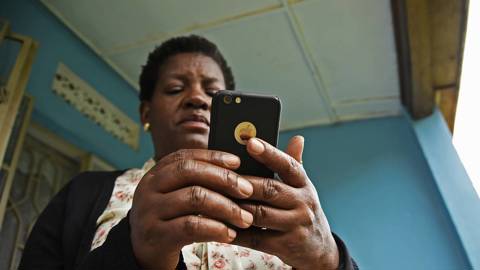
Moreover, renewable energy can provide a window to the outside world, via access to mobile phones, the Internet, television, and radio, and also power small, medium, and large enterprises. And availability of outdoor lighting can prevent violence against women and girls.
Achieving sustainable energy for all requires women’s full participation. Evidence from India and Nepal suggests that women’s involvement in decision-making is associated with better local environmental management. And, according to a global study, countries with higher female parliamentary representation are more prone to ratify international environmental treaties.
As the Rio Declaration, adopted at the first Earth Summit in 1992, states: “Women have a vital role in environmental management and development. Their full participation is therefore essential to achieve sustainable development.”
Twenty years later, with the stakes even higher, we can no longer afford inaction. That is why we are bringing the principle of gender equality to the forefront of discussions and partnerships to achieve sustainable energy for all by 2030.
To have unlimited access to our content including in-depth commentaries, book reviews, exclusive interviews, PS OnPoint and PS The Big Picture, please subscribe
The escalating war in the Middle East must be understood in a broader context. The fact that the Iranian regime felt emboldened to risk a direct strike on Israel attests to a changing world order in which Western power is increasingly open to challenge.
considers the implications of Iran’s unprecedented decision to launch a direct strike on Israeli territory.



NEW YORK – The United Nations “Rio+20” Earth Summit this month will be a staging ground to chart the course for inclusive economies, social equality, and environmental protection. For that reason, it must place sustainable development at the forefront of the global agenda.
It is already clear that achieving sustainable development is not possible without sustainable energy. Indeed, access to energy spurs development on many levels – not least in terms of women and their health, safety, and autonomy.
Recognizing this, the UN has declared 2012 the Year of Sustainable Energy for All, and UN Secretary-General Ban Ki-moon has launched a global initiative to achieve three ambitious goals by 2030: universal access to modern energy services, a doubling of the global rate of improvement in energy efficiency, and a doubling of the share of renewable energy in the global energy mix.
These are global issues. But, everywhere around the world, energy is a woman’s issue. It can mean the difference between safety and fear, freedom and servitude, and even life and death.
In many places, especially in rural areas, women spend long hours each day finding fuel wherever they can in the absence of sustainable energy sources. Globally, 1.3 billion people still lack access to electricity, and 2.7 billion people, mostly women, rely on wood, charcoal, and dung for cooking. Whether foraging for firewood, which may expose them and their daughters to the risk of rape, or spending their scarce resources on kerosene for smoky, inefficient lighting, women make difficult decisions every day about household energy resources and usage.
It is also women who suffer the disproportionate health impacts of unsustainable energy sources. Exposure to smoke from hazardous methods of cooking, heating, and lighting kills nearly two million people each year, 85% of whom are women and children who die from associated cancer, respiratory infections, and lung disease. Millions more suffer from exposure-related diseases.
Subscribe to PS Digital
Access every new PS commentary, our entire On Point suite of subscriber-exclusive content – including Longer Reads, Insider Interviews, Big Picture/Big Question, and Say More – and the full PS archive.
Subscribe Now
At the community level, a lack of energy at medical clinics impedes the ability of medical personnel to provide adequate treatment and care. It is estimated that 200,000-400,000 healthcare facilities in developing countries lack access to reliable electricity. This means that vaccines and blood cannot be stored safely, diagnostic equipment is often useless, and operating rooms cannot function at night.
For pregnant women, this lack of reliable electricity poses a significant risk to their own lives and those of their babies. Worldwide, 800 women die each day from complications of pregnancy and childbirth, and the vast majority of these deaths could be averted by providing quality health services, for which electricity is usually required.
Today, the long hours of unpaid work that women perform each day searching for firewood and other energy sources rob them of time to engage in more productive activities. That, in turn, deprives poor families of much-needed income.
It does not have to be this way. In Kenya, improved wood-burning stoves have reduced fuel requirements by some 40%, which has not only lowered women’s burden of unpaid work and reduced deforestation, but has also freed up time that women can devote to education, training, and paid employment, which will reduce poverty.
Providing sustainable energy for all will create new opportunities for women elsewhere as well. Solar energy can provide entire villages with lighting, pumped water, refrigeration, and the electrification of health centers, schools, and other public facilities.
Moreover, renewable energy can provide a window to the outside world, via access to mobile phones, the Internet, television, and radio, and also power small, medium, and large enterprises. And availability of outdoor lighting can prevent violence against women and girls.
Achieving sustainable energy for all requires women’s full participation. Evidence from India and Nepal suggests that women’s involvement in decision-making is associated with better local environmental management. And, according to a global study, countries with higher female parliamentary representation are more prone to ratify international environmental treaties.
As the Rio Declaration, adopted at the first Earth Summit in 1992, states: “Women have a vital role in environmental management and development. Their full participation is therefore essential to achieve sustainable development.”
Twenty years later, with the stakes even higher, we can no longer afford inaction. That is why we are bringing the principle of gender equality to the forefront of discussions and partnerships to achieve sustainable energy for all by 2030.
Read more from our "The Road to Rio+20" Focal Point.