An international initiative, called the “Electrification Roadmap,” is underway to connect 500 million people in developing countries to modern energy services by 2025. Electricity powers not only industrial development, but social and economic progress more broadly, and is crucial for lifting families and communities out of poverty.
JOHANNESBURG – An international initiative is underway to connect 500 million people in developing countries to modern energy services by 2025. That is a hugely ambitious – but entirely achievable – goal. It is also essential to realizing the United Nations Millennium Development Goals (MDGs), because, without access to energy, it will be almost impossible to reduce poverty and hunger, or improve education and health care.
After all, electricity powers not only industrial development, but social and economic progress more broadly. In developing countries, it is a key factor in helping to lift families and communities out of poverty. Yet 58% of Africans lack access to electricity, as do large numbers of people throughout the developing world.
The new international initiative, called the “Electrification Roadmap,” grew out of UN Secretary-General Ban Ki-moon’s focus on the importance of energy supplies for achieving the MDGs, as well as from his initiative “Sustainable Energy for All” (SE4ALL), and was officially launched at the Rio+20 conference on sustainable development in June 2012. As discussions there showed, these issues are receiving increased international attention and funding from governments, business, non-governmental organizations, and development finance institutions.
Eskom’s role is one of leadership and support. We have electrified more than four million households through a focused effort over a short period – an effort that has featured prominently in discussions held by the UN Secretary-General’s advisory council on sustainable energy, and that has drawn interest from other developing countries. The idea is to leverage our capabilities, specifically our experience and expertise, to assist others in their own electrification efforts.
An Electrification Roadmap implementation program is being developed in Sub-Saharan Africa, where we will facilitate the consolidation of national electrification plans in the Southern Africa Development Community by helping to finalize these plans where necessary, as well as to secure the resources needed to accelerate implementation. Partnerships are key to the success of this effort, which is why we are currently developing a model for stakeholder dialogue, financing, and implementation.
The ultimate objective is to take the Roadmap project to other regions of the world, bringing electricity to people and communities that have previously not had access to energy. The initiative is being led by Eskom Holdings SOC of South Africa and Duke Energy of the United States, and has the support of international organizations, including the Global Sustainable Electricity Partnership and the Southern African Power Pool.
Access every new PS commentary, our entire On Point suite of subscriber-exclusive content – including Longer Reads, Insider Interviews, Big Picture/Big Question, and Say More – and the full PS archive.
Subscribe Now
Sustainable energy is a laudable goal, but how do we achieve it for all? The SE4ALL program comprises three interlinked objectives, all to be achieved by 2030: ensure universal access to modern energy services; double the rate of improvement in energy efficiency; and double the share of renewable energy in the global energy mix.
By placing enormous emphasis on “sustainable development,” these objectives strengthen global efforts to mitigate the impact of climate change. We are promoting energy access in a way that reduces electricity utilities’ carbon footprint through improved efficiency and greater reliance on solar, wind, and hydroelectric power generation.
Clean-energy initiatives are an international priority. Every year, national energy ministers and international organizations meet at what is known as the Clean Energy Ministerial, a forum for sharing lessons learned, promoting best practices, and encouraging the transition to a global clean-energy economy.
At the African Union’s Conference of Energy Ministers of Africa in Addis Ababa in November, the assembled ministers expressed support and optimism for SE4ALL. The UN is currently deploying structures to facilitate the implementation of the international commitments that were made as part of the initiative.
The following month in Doha, the 18th Conference of the Parties to the UN Framework Convention on Climate Change, known as COP18, agreed to extend the Kyoto Protocol as the only existing and binding agreement under which developed countries commit to cutting greenhouse gases. Governments have agreed to work speedily toward adoption by 2015 of a comprehensive climate-change agreement that will cover all countries from 2020.
This is the background against which the Electrification Roadmap is being developed. The United Nations declared 2012 the “International Year of Sustainable Energy for All.” But that is just the start. Our work on the Electrification Roadmap will not be finished until the 500 millionth person has the opportunity for progress and prosperity that electricity brings.
To have unlimited access to our content including in-depth commentaries, book reviews, exclusive interviews, PS OnPoint and PS The Big Picture, please subscribe
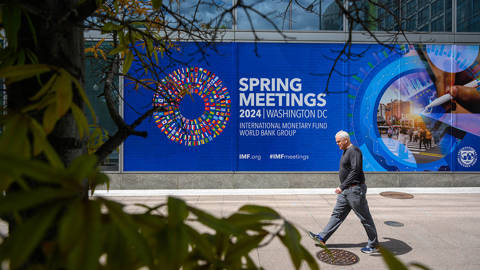
For the last several years, world leaders have made big promises and laid out bold plans to mitigate the climate crisis and help the neediest countries adapt. At this year's World Bank/IMF Spring Meetings, they must demonstrate that they can fulfill these promises, rather than simply touting new ones.
think policymakers need to get four things right to shore up the credibility of the international system.
With the exception of the extreme right, no one in Israel wants to be stuck in Gaza, responsible for 2.4 million Palestinians, and facing a likely insurgency. Israel can end this war soon and save those hostages who are still alive, having demilitarized Gaza and set the stage for an alternative to Hamas.
thinks the only strategic objective that matters is close – or close enough – to being met.
China’s authorities have powerful economic-policy levers at their disposal to achieve their 5% growth target this year and put the economy on a more sustainable long-term growth path. But several trends – from the shift toward state capitalism to population aging to the loss of goodwill between Chinese and Americans – could thwart China’s ambition to join the ranks of high-income countries by mid-century.




JOHANNESBURG – An international initiative is underway to connect 500 million people in developing countries to modern energy services by 2025. That is a hugely ambitious – but entirely achievable – goal. It is also essential to realizing the United Nations Millennium Development Goals (MDGs), because, without access to energy, it will be almost impossible to reduce poverty and hunger, or improve education and health care.
After all, electricity powers not only industrial development, but social and economic progress more broadly. In developing countries, it is a key factor in helping to lift families and communities out of poverty. Yet 58% of Africans lack access to electricity, as do large numbers of people throughout the developing world.
The new international initiative, called the “Electrification Roadmap,” grew out of UN Secretary-General Ban Ki-moon’s focus on the importance of energy supplies for achieving the MDGs, as well as from his initiative “Sustainable Energy for All” (SE4ALL), and was officially launched at the Rio+20 conference on sustainable development in June 2012. As discussions there showed, these issues are receiving increased international attention and funding from governments, business, non-governmental organizations, and development finance institutions.
Eskom’s role is one of leadership and support. We have electrified more than four million households through a focused effort over a short period – an effort that has featured prominently in discussions held by the UN Secretary-General’s advisory council on sustainable energy, and that has drawn interest from other developing countries. The idea is to leverage our capabilities, specifically our experience and expertise, to assist others in their own electrification efforts.
An Electrification Roadmap implementation program is being developed in Sub-Saharan Africa, where we will facilitate the consolidation of national electrification plans in the Southern Africa Development Community by helping to finalize these plans where necessary, as well as to secure the resources needed to accelerate implementation. Partnerships are key to the success of this effort, which is why we are currently developing a model for stakeholder dialogue, financing, and implementation.
The ultimate objective is to take the Roadmap project to other regions of the world, bringing electricity to people and communities that have previously not had access to energy. The initiative is being led by Eskom Holdings SOC of South Africa and Duke Energy of the United States, and has the support of international organizations, including the Global Sustainable Electricity Partnership and the Southern African Power Pool.
Subscribe to PS Digital
Access every new PS commentary, our entire On Point suite of subscriber-exclusive content – including Longer Reads, Insider Interviews, Big Picture/Big Question, and Say More – and the full PS archive.
Subscribe Now
Sustainable energy is a laudable goal, but how do we achieve it for all? The SE4ALL program comprises three interlinked objectives, all to be achieved by 2030: ensure universal access to modern energy services; double the rate of improvement in energy efficiency; and double the share of renewable energy in the global energy mix.
By placing enormous emphasis on “sustainable development,” these objectives strengthen global efforts to mitigate the impact of climate change. We are promoting energy access in a way that reduces electricity utilities’ carbon footprint through improved efficiency and greater reliance on solar, wind, and hydroelectric power generation.
Clean-energy initiatives are an international priority. Every year, national energy ministers and international organizations meet at what is known as the Clean Energy Ministerial, a forum for sharing lessons learned, promoting best practices, and encouraging the transition to a global clean-energy economy.
At the African Union’s Conference of Energy Ministers of Africa in Addis Ababa in November, the assembled ministers expressed support and optimism for SE4ALL. The UN is currently deploying structures to facilitate the implementation of the international commitments that were made as part of the initiative.
The following month in Doha, the 18th Conference of the Parties to the UN Framework Convention on Climate Change, known as COP18, agreed to extend the Kyoto Protocol as the only existing and binding agreement under which developed countries commit to cutting greenhouse gases. Governments have agreed to work speedily toward adoption by 2015 of a comprehensive climate-change agreement that will cover all countries from 2020.
This is the background against which the Electrification Roadmap is being developed. The United Nations declared 2012 the “International Year of Sustainable Energy for All.” But that is just the start. Our work on the Electrification Roadmap will not be finished until the 500 millionth person has the opportunity for progress and prosperity that electricity brings.