WEEKLY SERIES

INTERNATIONAL ECONOMICS

STRATEGIC SPOTLIGHT

GLOBAL FINANCE

ECONOMICS OF DEVELOPMENT

ECONOMIC AND REGULATORY POLICY

ECONOMIC HISTORY

ECONOMIC PERSPECTIVES

PUBLIC INTELLECTUALS

GLOBAL OUTLOOK

REGIONAL EYE

SPECIAL SERIES

PROJECT SYNDICATE

The New Wealth of Nations

In Finance We Distrust

English Spanish Russian French German Italian Czech Chinese Arabic

2010-07-16

MILAN – Around the world, the debate about financial regulation is coming to a head. A host of arguments and proposals is in play, often competing with one another – and thus inciting public and political confusion. 

One approach to financial re-regulation – supported by arguments of varying persuasiveness – is to limit the size and scope of financial institutions. Some claim that smaller entities can fail without impairing the system, thus sparing taxpayers the cost of a bailout. But if systemic risk emerges in ways that are not yet fully understood, smaller banks may all fail or become distressed simultaneously, damaging the real economy. 

A second, hotly debated argument is that limiting banks’ size and scope has relatively low costs in terms of performance. This point is used to bolster a third argument: large institutions have undue political influence and thus “capture” their regulators. Put bluntly, large and profitable financial institutions will find a way to get the regulatory system they want – one that is compatible with a highly profitable trading super-structure that goes beyond the requirements of hedging and seeks to maximize short-term gains.

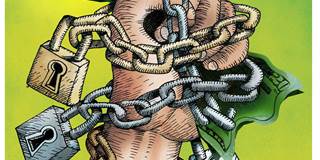
A second approach, on which there is substantial agreement in principle, is to limit leverage. The main argument is that high leverage contributes powerfully to systemic risk – a condition in which asset prices move in a highly correlated way, and distress, when it occurs, spreads quickly.   Leverage is also partially caused by misperceptions of risk and mispricing of liquidity.  It is desirable to constrain leverage, but not to the point of increasing the cost of capital and investment.

Moreover, few would disagree that, as the complexity of the system increases, gaps and asymmetries in terms of information, knowledge, and expertise are multiplying. Such asymmetries impair market performance in a variety of ways, and conflicts of interest are particularly dangerous in such an environment because they create an incentive to exploit precisely these advantages. 

Rigorous disclosure requirements that include conflicts of interest are one way to limit the potential damage. Or the conflicts can be limited by regulating the scope of financial institutions. For example, asset management, distribution, underwriting and securitization, and proprietary trading would be separated in various ways. This approach has the added advantage of preventing different risk profiles and their appropriate capital requirements from getting mixed up in the same entity and balance sheet.

There are two other ways to address complexity and asymmetries. One, widely adopted in developing countries, is simply to impose restrictions on products (for example, derivatives and hedge funds) on the grounds that the upside in terms of risk avoidance far outweigh the costs – less access to capital and reduced risk spreading. The other way is to try to reduce the informational gaps or their impact by regulating the expertise and incentives surrounding the rating process (the failure of which had serious consequences in the current crisis).

At a somewhat deeper level, there are two conflicting threads running through the public debate surrounding the crisis. One is the “perfect storm” position: there were very many failures, misperceptions, informational asymmetries, and complexities, as well as much repugnant behavior, but it never occurred to market participants, regulators, or academics that the aggregate effect would be a near-collapse of the system. Critics of that argument maintain that sophisticated players understood the systemic risks, didn’t care, and cynically played the game that they helped to create – in some cases for enormous profit.

It now seems universally accepted (often implicitly) that government should establish the structure and rules for the financial system, with participants then pursuing their self-interest within that framework. If the framework is right, the system will perform well. The rules bear the burden of ensuring the collective social interest in the system’s stability, efficiency, and fairness.

But in a complex system in which expertise, insight, and real-time information are not concentrated in one place, and certainly not in government and regulatory circles, reliance on such a framework seems deficient and unwise. Moreover, it ignores the importance of trust. A better starting point, I believe, is the notion of shared responsibility for the stability of the system and its social benefits – shared, that is, by participants and regulators.

It is striking that no senior executive of whom I am aware has laid out in any detail how his or her institution’s expertise could be deployed in pursuit of the collective goal of stability. The suspicion that underlies much of today’s public anger is that these institutions, having influenced the formulation of the legal and ethical rules, could do more to contribute to stability than just obey them.

The finance industry, regulators, and political leaders need to create a shared sense of collective responsibility for the system as a whole and its impact on the rest of the economy. This set of values should be deeply embedded in the industry – and thus should transcend haggling over regulation. It should take precedence over narrow self-interest or the potential profit opportunities associated with exploiting an informational advantage. And it should be thought of as an addition to the guiding norms, rules, and ethics associated with “normal” times.

Some will object that this idea won’t work because it runs counter to greedy human nature. Yet such values shape other professions. In medicine, there is a huge and unbridgeable gap in expertise and information between doctors and patients. The potential for abuse is enormous. It is limited by professional values that are inculcated throughout doctors’ training, and which are bolstered by a quiet form of peer review.

By itself, such a shift in values and the implicit model that defines roles certainly will not solve the challenge of systemic risk. Neither will fiddling with the rules. Taken seriously, however, it could help provide an ongoing reminder of the importance of the financial sector to the broader well-being of the economy. It might even help start rebuilding trust.

Michael Spence was awarded the Nobel Prize in Economics in 2001. An expanded treatment of the lessons and challenges of the financial crisis can be found in Post-Crisis Growth in Developing Countries: A Special Report of the Commission on Growth and Development on the Implications of the 2008 Financial Crisis.”

You might also like to read more from or return to our home page.

Reprinting material from this website without written consent from Project Syndicate is a violation of international copyright law. To secure permission, please contact distribution@project-syndicate.org.
English Spanish Russian French German Italian Czech Chinese Arabic

You must be logged in to post or reply to a comment.
Please log in or sign up for a free account.


farfetched 06:38 19 Jul 10

Refer to comments made on Double-Dip Concerns from Nouriel Roubini 

Far-fetched: But when the World Seems Too Of Set A Recovery, Market Should Take OFF On The Backs of The Small Caps and Small Business America Lending Given Open Doors For Job Build out Recovery... 

Far-fetched, not anymore, keep God within your sight and within your lives as the many changes coming; and those who are getting the theme of living within "Teleios" and in your means with inviting the Creator; brings peaceful transitions within their lives that you can count on.

Peace, I am out of here for now...

James Gornick http://www.investors.com/forums/t/2591616.aspx


dickson2675 08:59 22 Jul 10

while i think that the idea of creating a common sense of shared responsibility is a noble goal, I think that this too, would have to be achieved through regulation, instead of just "business ethics" taught at school or at work.

The "sense of collective responsibility" exists in the medical world because there is a cost to failure for doctors, and mistakes can often be traced back to a single doctor or a few individuals. If a doctor made a serious mistake, he would lose his patients. However, if the finance industry made a mistake which adversely affects the whole economy, there is frequently no one that we can hold accountable. I am convinced that this "common sense of collective responsibility" is born not out of normative concerns, but of real costs, which are not sufficiently imposed upon the finance industry.

I believe that some kind of repercussion set in place to let the finance industry know that they can't just get out of the situation just like that.


canadave 06:33 24 Jul 10

Respectfully, this article seems to be promoting a watering down of regulation in favour of placing the foxes in charge of the hen house. I'm not sure if this is cynicism or naivety, but given the author's credentials, naivety seems unlikely. The distorted incentives of the financial industry are so deeply rooted that expecting the industry to act of its of volition in the best interests of consumers, taxpayers or even shareholders, is absolutely ridiculous. 


Sumati 07:36 11 Aug 10

 Nobel Laureate , Michael Spence , voiced the views of many ,when he emphasized the need for building trust and collective responsibility and changing prevailing values in the world of finance and regulation.  What is in fact  needed is a mechanism , or “invisible hand”  to hold Adam Smith’s invisible hand ,within the framework of market economies, and without the active agency of planning and control, which is the inevitable “road to serfdom”, as brought out more than succinctly by another Nobel Laureate , Friedrich von Hayek, in his brilliant exposition of this  name. Such an invisible hand to hold the already invisible hand , may appear at first to be an impossible task. However, deeper reflection would make one realize that this may not actually be so.

 Such a middle of the road path , which leads to greater trust and confidence in markets , without the attendant hazards of State planning is indeed a possibility. What it requires is use of   methods  somewhat less conventional than  those of the market , or the alternative of  State planning. These “out of the box” techniques can be  utilized for gently steering  the market economy, in a manner which leads to outcomes which are socially more desirable than what it would  otherwise lead to, based on the lone hand of Adam Smith . Suggestions for  bringing  the seemingly impossible into the realm of possibility  are mentioned here , but further  work will naturally be required to  shape fully “the hand that holds Adam Smith’s invisible hand”.

 Firstly, there is the possibility of utilizing    newly emerging knowledge from the field  of neuro-sciences,  including  some of the latest mind mapping techniques to determine the conditions and situations which lead to  trust and co-operation between individuals and institutions. Greater knowledge on this front can have substantial  payoffs in terms of efficient functioning of markets and societal welfare. Results from the field of neuro-science hold the promise ,  distant as it may today seem, of actually influencing human behavior and underlying human minds  , in a manner which makes them function in a less selfish, and more co-operative manner.

 Secondly, there is the possibility of utilizing culture  as an agent of positive change . The growth and development of the Chinese economy , the Indian economy, and  many  countries of the ‘developed world” has hinged on the bedrock of their respective  cultures, including values, attitudes and  beliefs . Perhaps it is time to start thinking actively about how this apparently “soft” technique can be introduced as a positive force into the drab world of economics and  finance to create individuals, markets , economies , regulators and others , who are better tuned to a world which they together  build and preserve.

  Commentator , Mark Leonard , while focusing on the ideas which shaped  Chinese development has  narrated inter alia,  the  impact of screening a six part documentary film called  “River  Elegy” on  main state television during prime time. The  story of the Yellow River ,  considered to be ‘the cradle of Chinese civilization, was used  to launch a total attack on China’s traditions,  as an enemy of the Chinese people. Each episode targeted a Chinese tradition  that was holding the country back. The Great Wall was treated as a symbol of meaningless isolation. The documentary advocated breaking the bonds of traditional society in favor of  modernization.  The issues in the film were passionately  discussed and debated and less  than a year later , these culminated in the demonstrations at Tiananmen Square in 1989. Notwithstanding this particular outcome , the  message that emerges is the enormous potential that such an approach can have in  molding not just outward behavior, but minds, attitudes, beliefs, lives , economies, and nations.

 Another example of this approach is the effect that screening of “Wall Street”,  about twenty  three years ago, delivering the mantra, “Greed is good”, has possibly  had , not merely on the American economy, but on much of the developed world and that part of the world which is now developing .

 Perhaps it is time that such techniques are used  positively for molding society , without use of coercive power , but aimed at making individuals think for themselves about the kind of world they would like to fashion and live in. 

 Thirdly, there is the possibility of utilizing newly discovered  Network science as an agent of change across societies and economies for fostering a positive atmosphere of trust and co-operation. Harvard physician and medical sociologist Nicholas Christakis  has shown how  nodes connected by links create networks, and how as the number of nodes and links increase, the number of possible configurations grow exponentially, and create tremendous possibilities of creating change .  In the present context, network science holds the possibility of promoting more responsible and co-operative behavior in the field of finance and regulation.                

 “Soft economic power”  of the form and type mentioned above needs to be developed utilizing research and tools from  disciplines other than traditional economics. Given the potential power of such knowledge, it will need to be in safe hands of responsible leaders  who  have proven themselves capable of handling trust , through personal sacrifice. The combination of knowledge and action can then create the necessary scaffolding to build not just minds of the future, but finance, economies and nations in whom we can trust  --an invisible hand to hold Adam Smith’s invisible hand !


evera 06:06 15 Oct 10

Dear Sir (I knew you at GSB)

Some 25 years ago the concept of Shadow Price was used to represent the real cost of exports under the assumptions of excessive capacities in labour and factories markets.

Those concepts were used, I believe, by people arguing for export promotion and perhaps, protectionists.

These days when it is recognized that exchange rate policies make or break current accounts (within limits) it may be useful to return to the use of those shadow prices.

The US and others might decide to impose barriers like this:

Cost of product: 100

Cost of labor in product 30

Shadow cost of that labor in the US 17

Protection 13 per unit plus the going percentage.

As ugly as this looks, Anarchy is worse than this.

Please comment.


AUTHOR INFO

Michael Spence, a Nobel laureate in economics, is Professor of Economics at New York University’s Stern School of Business, Distinguished Visiting Fellow at the Council on Foreign Relations, Academic Board Chairman of the Fung Global Institute in Hong Kong, and Senior Fellow at the Hoover Institution, Stanford University. His latest book is The Next Convergence – The Future of Economic Growth in a Multispeed World (www.thenextconvergence.com).