Discussions about global warming are marked by an increasing desire to stamp out “impure” thinking, to the point of questioning the value of democratic debate. But shutting down discussion simply means the disappearance of reason from public policy.
COPENHAGEN – Discussions about global warming are marked by an increasing desire to stamp out “impure” thinking, to the point of questioning the value of democratic debate. But shutting down discussion simply means the disappearance of reason from public policy.
In March, Al Gore’s science adviser and prominent climate researcher, Jim Hansen, proclaimed that when it comes to dealing with global warming, the “democratic process isn’t working.” Although science has demonstrated that CO2 from fossil fuels is heating the planet, politicians are unwilling to follow his advice and stop building coal-fired power plants.
Hansen argues that, “the first action that people should take is to use the democratic process. What is frustrating people, me included, is that democratic action affects elections, but what we get then from political leaders is greenwash.” Although he doesn’t tell us what the second or third action is, he has turned up in a British court to defend six activists who damaged a coal power station. He argues that we need “more people chaining themselves to coal plants,” a point repeated by Gore.
The Nobel laureate in economics Paul Krugman goes further. After the narrow passage of the Waxman-Markey climate-change bill in the United States House of Representatives, Krugman said that there was no justification for a vote against it. He called virtually all of the members who voted against it, “climate deniers” who were committing “treason against the planet.”
Krugman said that the “irresponsibility and immorality” of the representatives’ democratic viewpoints were “unforgivable” and a “betrayal.” He thus accused almost half of the democratically elected members of the House, from both parties, of treason for holding the views that they do – thereby essentially negating democracy.
Less well-known pundits make similar points, suggesting that people with “incorrect” views on global warming should face Nuremburg-style trials or be tried for crimes against humanity. There is clearly a trend. The climate threat is so great – and democracies are doing so little about it – that people conclude that maybe democracy is part of the problem, and that perhaps people ought not to be allowed to express heterodox opinions on such an important topic.
Access every new PS commentary, our entire On Point suite of subscriber-exclusive content – including Longer Reads, Insider Interviews, Big Picture/Big Question, and Say More – and the full PS archive.
Subscribe Now
This is scary, although not without historical precedent. Much of the American McCarthyism of the 1940’s and 1950’s was driven by the same burning faith in the righteousness of the mission – a faith that saw fundamental rights abrogated. We would be well served to go down a different path.
Gore and others often argue that if the science of climate change concludes that CO2 emissions are harmful, it follows that we should stop those harmful emissions – and that we are morally obliged to do so. But this misses half the story. We could just as well point out that since science tells us that speeding cars kill many people, we should cut speed limits to almost nothing. We do no such thing, because we recognize that the costs of high-speed cars must be weighed against the benefits of a mobile society.
Indeed, nobody emits CO2 for fun. CO2 emissions result from other, generally beneficial acts, such as burning coal to keep warm, burning kerosene to cook, or burning gas to transport people. The benefits of fossil fuels must be weighed against the costs of global warming.
Gore and Hansen want a moratorium on coal-fired power plants, but neglect the fact that the hundreds of new power plants that will be opened in China and India in the coming years could lift a billion people out of poverty. Negating this outcome through a moratorium is clearly no unmitigated good.
Likewise, reasonable people can differ on their interpretation of the Waxman-Markey bill. Even if we set aside its masses of pork-barrel spending, and analyses that show it may allow more emissions in the US for the first decades, there are more fundamental problems with this legislation.
At a cost of hundreds of billions of dollars annually, it will have virtually no impact on climate change. If all of the bill’s many provisions were entirely fulfilled, economic models show that it would reduce the temperature by the end of the century by 0.11°C (0.2°F) – reducing warming by less than 4%.
Even if every Kyoto-obligated country passed its own, duplicate Waxman-Markey bills – which is implausible and would incur significantly higher costs – the global reduction would amount to just 0.22°C (0.35°F) by the end of this century. The reduction in global temperature would not be measurable in a hundred years, yet the cost would be significant and payable now.
Is it really treason against the planet to express some skepticism about whether this is the right way forward? Is it treason to question throwing huge sums of money at a policy that will do virtually no good in a hundred years? Is it unreasonable to point out that the inevitable creation of trade barriers that will ensue from Waxman-Markey could eventually cost the world ten times more than the damage climate change could ever have wrought?
Today’s focus on ineffective and costly climate policies shows poor judgment. But I would never want to shut down discussion about these issues – whether it is with Gore, Hansen, or Krugman. Everybody involved in this discussion should spend more time building and acknowledging good arguments, and less time telling others what they cannot say. Wanting to shut down the discussion is simply treason against reason.
To have unlimited access to our content including in-depth commentaries, book reviews, exclusive interviews, PS OnPoint and PS The Big Picture, please subscribe
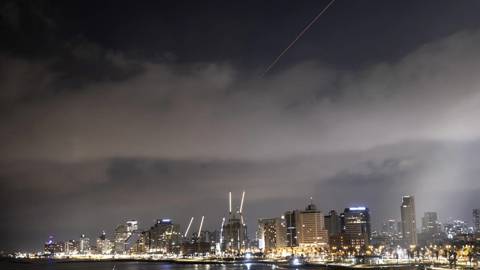
The escalating war in the Middle East must be understood in a broader context. The fact that the Iranian regime felt emboldened to risk a direct strike on Israel attests to a changing world order in which Western power is increasingly open to challenge.
considers the implications of Iran’s unprecedented decision to launch a direct strike on Israeli territory.








COPENHAGEN – Discussions about global warming are marked by an increasing desire to stamp out “impure” thinking, to the point of questioning the value of democratic debate. But shutting down discussion simply means the disappearance of reason from public policy.
In March, Al Gore’s science adviser and prominent climate researcher, Jim Hansen, proclaimed that when it comes to dealing with global warming, the “democratic process isn’t working.” Although science has demonstrated that CO2 from fossil fuels is heating the planet, politicians are unwilling to follow his advice and stop building coal-fired power plants.
Hansen argues that, “the first action that people should take is to use the democratic process. What is frustrating people, me included, is that democratic action affects elections, but what we get then from political leaders is greenwash.” Although he doesn’t tell us what the second or third action is, he has turned up in a British court to defend six activists who damaged a coal power station. He argues that we need “more people chaining themselves to coal plants,” a point repeated by Gore.
The Nobel laureate in economics Paul Krugman goes further. After the narrow passage of the Waxman-Markey climate-change bill in the United States House of Representatives, Krugman said that there was no justification for a vote against it. He called virtually all of the members who voted against it, “climate deniers” who were committing “treason against the planet.”
Krugman said that the “irresponsibility and immorality” of the representatives’ democratic viewpoints were “unforgivable” and a “betrayal.” He thus accused almost half of the democratically elected members of the House, from both parties, of treason for holding the views that they do – thereby essentially negating democracy.
Less well-known pundits make similar points, suggesting that people with “incorrect” views on global warming should face Nuremburg-style trials or be tried for crimes against humanity. There is clearly a trend. The climate threat is so great – and democracies are doing so little about it – that people conclude that maybe democracy is part of the problem, and that perhaps people ought not to be allowed to express heterodox opinions on such an important topic.
Subscribe to PS Digital
Access every new PS commentary, our entire On Point suite of subscriber-exclusive content – including Longer Reads, Insider Interviews, Big Picture/Big Question, and Say More – and the full PS archive.
Subscribe Now
This is scary, although not without historical precedent. Much of the American McCarthyism of the 1940’s and 1950’s was driven by the same burning faith in the righteousness of the mission – a faith that saw fundamental rights abrogated. We would be well served to go down a different path.
Gore and others often argue that if the science of climate change concludes that CO2 emissions are harmful, it follows that we should stop those harmful emissions – and that we are morally obliged to do so. But this misses half the story. We could just as well point out that since science tells us that speeding cars kill many people, we should cut speed limits to almost nothing. We do no such thing, because we recognize that the costs of high-speed cars must be weighed against the benefits of a mobile society.
Indeed, nobody emits CO2 for fun. CO2 emissions result from other, generally beneficial acts, such as burning coal to keep warm, burning kerosene to cook, or burning gas to transport people. The benefits of fossil fuels must be weighed against the costs of global warming.
Gore and Hansen want a moratorium on coal-fired power plants, but neglect the fact that the hundreds of new power plants that will be opened in China and India in the coming years could lift a billion people out of poverty. Negating this outcome through a moratorium is clearly no unmitigated good.
Likewise, reasonable people can differ on their interpretation of the Waxman-Markey bill. Even if we set aside its masses of pork-barrel spending, and analyses that show it may allow more emissions in the US for the first decades, there are more fundamental problems with this legislation.
At a cost of hundreds of billions of dollars annually, it will have virtually no impact on climate change. If all of the bill’s many provisions were entirely fulfilled, economic models show that it would reduce the temperature by the end of the century by 0.11°C (0.2°F) – reducing warming by less than 4%.
Even if every Kyoto-obligated country passed its own, duplicate Waxman-Markey bills – which is implausible and would incur significantly higher costs – the global reduction would amount to just 0.22°C (0.35°F) by the end of this century. The reduction in global temperature would not be measurable in a hundred years, yet the cost would be significant and payable now.
Is it really treason against the planet to express some skepticism about whether this is the right way forward? Is it treason to question throwing huge sums of money at a policy that will do virtually no good in a hundred years? Is it unreasonable to point out that the inevitable creation of trade barriers that will ensue from Waxman-Markey could eventually cost the world ten times more than the damage climate change could ever have wrought?
Today’s focus on ineffective and costly climate policies shows poor judgment. But I would never want to shut down discussion about these issues – whether it is with Gore, Hansen, or Krugman. Everybody involved in this discussion should spend more time building and acknowledging good arguments, and less time telling others what they cannot say. Wanting to shut down the discussion is simply treason against reason.